KAYAK RENTAL · HISTORICAL PARTNER CASE
How Kayakomat turned kayak racks into a distributed rental network
Kayakomat shows how a booking platform, automatically generated access codes and secured waterside racks can support a multi-country kayak-rental network.
Relationship disclosure: Rafael Frankow works with igloohome in a sales-consulting capacity. The source may include igloohome material; this case is not an independent product test or endorsement.
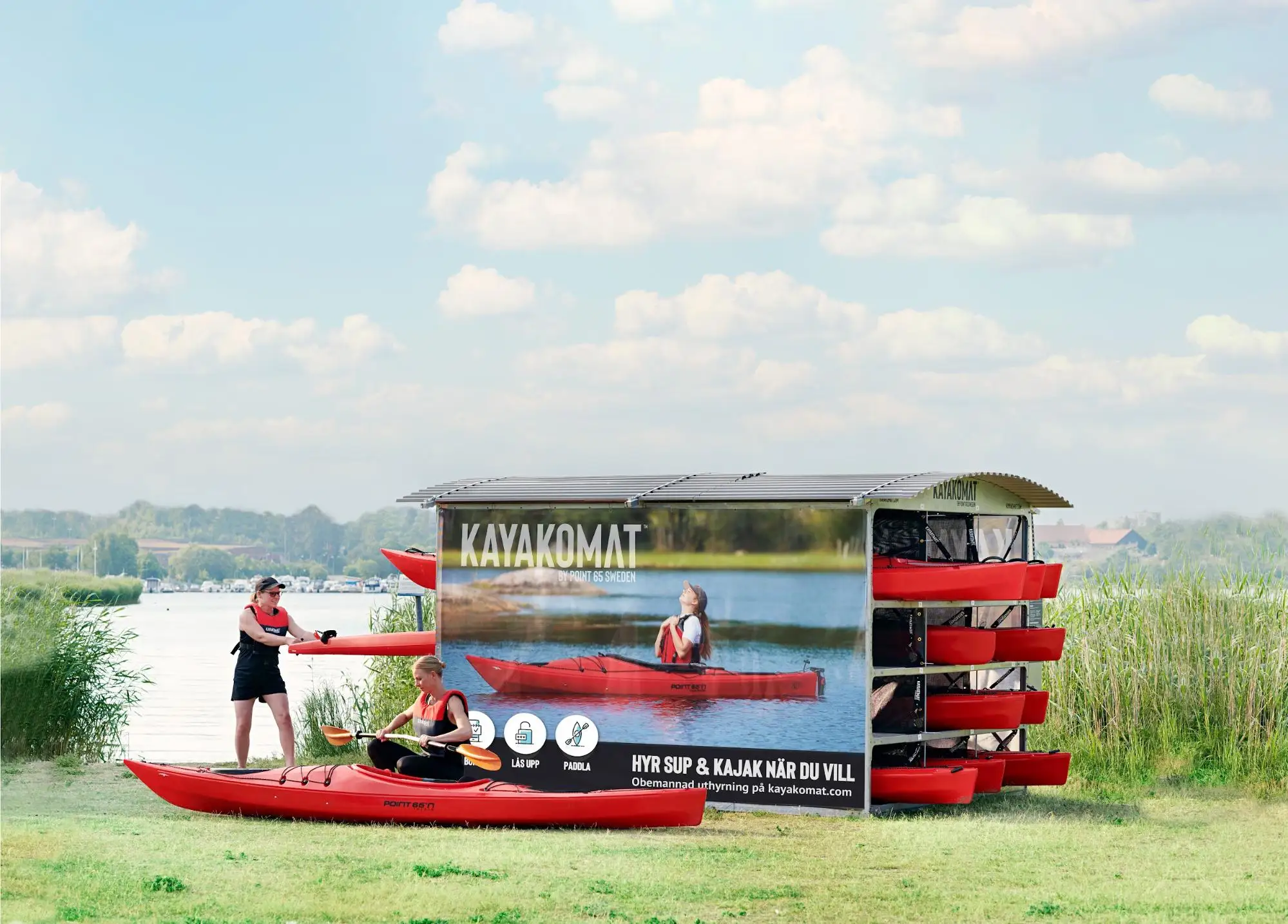
A rental station, not just a rack of locks
Swedish-origin international network. The supplier reports more than 1,400 padlocks within two years of a late-2020 trial; padlocks are not station counts.
A reserved rack position replaces arranging a staffed kayak handover beside every body of water.
The customer journey
A customer selects a location and timeslot, receives an allocated rack compartment and uses a time-limited PIN to release the booked kayak. The handover can happen at the water without a staffed shop or physical key exchange.
What the published case reported
The igloohome case says Point 65 began a trial in late 2020, integrated its booking system with the iglooworks API and deployed more than 1,400 padlocks within two years. It also reported 17,000 bookings and more than 30,000 users at the time of publication. These are useful historical indicators, not current independently verified totals.
Why this model is commercially interesting
The rack is both inventory storage and a small point of sale. Expansion depends on obtaining good sites, maintaining equipment, managing seasonal demand and supporting customers when a code, compartment or kayak does not match the booking.
Making it work on site
The case documents a booking-system integration with the iglooworks API. Secured racks and offline-capable PIN locks can avoid a live lock connection; site consent, safe launch access and equipment servicing still remain.
Issue the station, bay and time-window code before arrival. A PIN can let the guest unlock without an app, but code receipt, safety information and the means of getting help still need planning.
Costs, upkeep and the takeaway
Model each station’s seasonal utilisation and service route. Historical network bookings show adoption, not the profit of a new local franchise or site.
The repeatable unit is a serviced rental station, not a row of connected padlocks.